
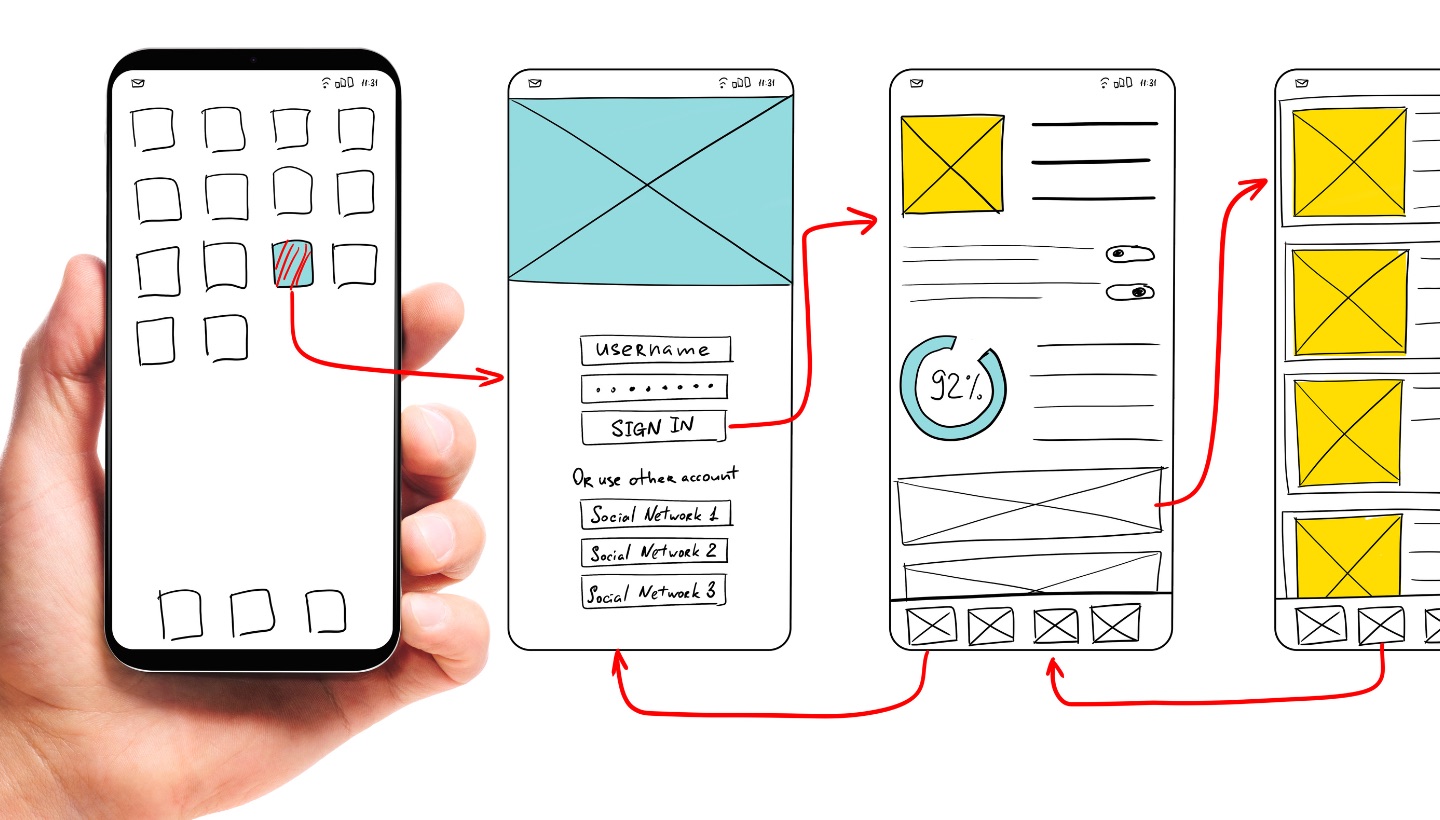
In short: we build mobile apps for iOS and Android with cross-platform technology (Flutter, React Native) or natively (Kotlin), together with the backend, admin panel and CRM/ERP integrations. A simple app (MVP) typically costs €10,000–20,000 and takes 2–4 months. We send an initial estimate within 48 hours.
What mobile apps do we build?
- Field team apps – visit reports, photos, surveys, tasks and routes, offline mode with sync.
- Customer apps – customer accounts, orders and payments, bookings, loyalty programmes, push notifications.
- Mobile versions of business systems – CRM, tickets, documents and approvals on the phone.
- Apps with AI features – image recognition, AI assistants, automatic data entry.
- Startup MVPs – a first product version to validate the idea, ready to grow.
Examples from our projects
Merchassistant (MarketEye) – a mobile app and browser-based system for merchandising management in FMCG, with surveys and image recognition. It is used by more than 4,000 people in the field; our specialists develop its key features. See the merchandiser app.
WearMeUp.Club – a web and mobile platform for sewing enthusiasts: patterns generated for the user's measurements and a machine learning module that recognises clothing in photos. Read the case study.
More projects: 4B Systems case studies.
Flutter, React Native or native?
| Approach | When to choose it | Technologies |
|---|---|---|
| Cross-platform | most business apps and MVPs; one team, one codebase | Flutter, React Native |
| Native | demanding graphics, heavy use of sensors and hardware | Kotlin (Android), Swift (iOS) |
| PWA | simple mobile access without app store publishing | web app (e.g. Vue.js, React) |
We usually build the backend and admin panel in PHP (Laravel), Python or Node.js, so the app can talk to your CRM, ERP, payment provider or warehouse system.
How we work
- Workshops and MVP scope – goals, users and the feature list for version one.
- UX/UI design and clickable prototype – you test the app before any code is written.
- Development in sprints – a working build to review every two weeks.
- Testing on real devices – different phone models, OS versions and network conditions.
- Publishing on Google Play and the App Store – store listings and review handled with you.
- Maintenance and growth – updates for new iOS and Android versions, error monitoring, new features.
Each step is described in our guide How to develop a mobile app – an A to Z guide.
How much does a business mobile app cost?
| App type | Example | Approximate cost (net) | Time |
|---|---|---|---|
| Simple / MVP | product catalogue, bookings, field team app | €10,000–20,000 | 2–4 months |
| Medium | user accounts, payments, notifications, CRM/ERP integration | €20,000–60,000 | 4–7 months |
| Complex | marketplace, real-time features, multiple roles, AI | from €60,000 | 7–12+ months |
Add store developer accounts (Google Play USD 25 one-off, Apple USD 99 per year – see the actual costs of publishing on Google Play) and maintenance, usually 15–20% of the build cost per year.
Want a figure for your idea? Describe your project and within 48 hours we will send a budget estimate, timeline and proposed architecture.
FAQ – mobile app development
Do you build apps for both iOS and Android?
Yes. We mostly use Flutter or React Native – one codebase runs on both systems, which is faster and cheaper than two separate native apps.
How long does it take to build a mobile app?
A simple app (MVP) usually takes 2–4 months, a medium one 4–7 months. We give an exact timeline after the workshops, together with the quote.
Can the app integrate with our CRM or ERP?
Yes. Integrations with business systems, online payments and external services (SMS, e-signature, maps) are standard in our projects.
Do you help with publishing on Google Play and the App Store?
Yes. We prepare the app for both stores' requirements and the store listings, and guide you through the review. The app can be published on your company's account.
Who owns the source code?
Rights to the code and design are transferred as set out in the contract – usually in full to the client after payment for the given stage.